Take Your Diving Further
Technical diving opens the door to new opportunities, from exploring deeper shipwrecks to conducting extended dives beyond recreational limits. It also requires additional knowledge, specialized equipment, careful planning, and well-developed diving skills.
Great Lakes Tech Diving offers TDI technical diver training for divers interested in beginning or advancing their technical diving education.
With more than 50 years of diving experience and over 25 years teaching technical diving, I bring a practical, experience-based approach to instruction, with particular emphasis on the demands of Great Lakes wreck diving.
Open-Circuit Technical Diving
Open-circuit technical diving uses redundant equipment, specialized breathing gases, and advanced dive planning to safely conduct dives beyond recreational limits.
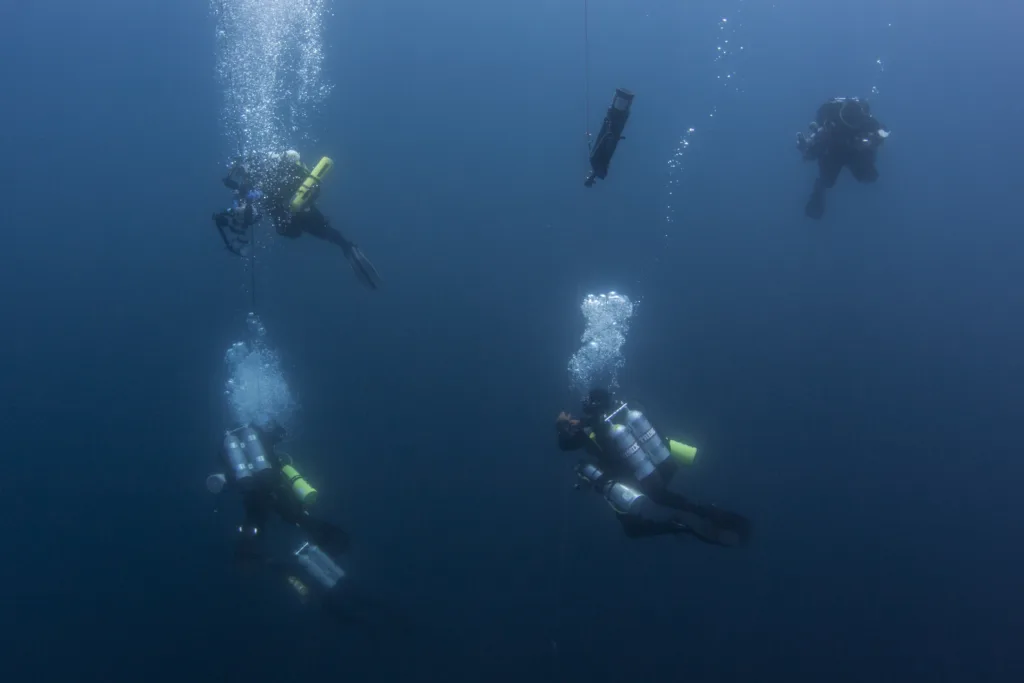
Great Lakes Tech Diving offers the following TDI open-circuit courses:
- TDI Intro to Tech: An introduction to technical diving equipment, configuration, buoyancy, trim, propulsion techniques, and team procedures.
- TDI Advanced Nitrox: Training in the use of higher-oxygen breathing mixtures, including oxygen exposure management, equipment considerations, and advanced diving procedures.
- TDI Decompression Procedures: Training in planning and conducting dives requiring staged decompression, including decompression gas management and emergency procedures.
- TDI Trimix Diver: Training in the use of helium-based breathing mixtures for deeper technical diving, including gas selection, dive planning, and decompression procedures.
- TDI Advanced Trimix Diver: Advanced training for experienced technical divers conducting deeper and more complex dives using helium-based breathing mixtures and multiple decompression gases.
Whether you're taking your first steps into technical diving or pursuing more advanced qualifications, instruction focuses on developing the skills, knowledge, and judgment needed for responsible technical diving.
Closed-Circuit Rebreather Training
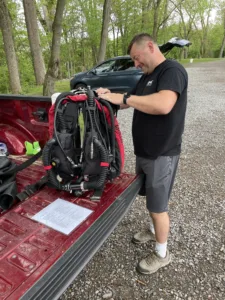 Closed-circuit rebreathers offer significant advantages for extended and deeper diving, including efficient breathing gas use, reduced gas consumption, and the ability to maintain a more consistent oxygen partial pressure throughout the dive.
Great Lakes Tech Diving provides TDI training on the Hollis Prism 2 closed-circuit rebreather, including:
- TDI Air Diluent CCR Diver: Initial training in the operation of the Hollis Prism 2, including equipment preparation, dive procedures, oxygen monitoring, buoyancy control, and emergency management.
- TDI Air Diluent Decompression Procedures CCR Diver: Advanced training in planning and conducting decompression dives using an air diluent, with emphasis on decompression procedures, bailout planning, and emergency management.
- TDI Helitrox Decompression Procedures CCR Diver: Training in the use of helium-containing diluent mixtures for decompression diving, including breathing gas selection, dive planning, bailout procedures, and emergency management.
Rebreather training emphasizes a thorough understanding of the equipment, disciplined operating procedures, effective problem-solving, and the ability to recognize and respond appropriately to abnormal situations.
Breathing Gas Blender Training
Understanding how breathing gases are prepared is an important part of technical diving. Proper gas blending requires knowledge of gas properties, oxygen compatibility, blending procedures, and safe handling practices.
Great Lakes Tech Diving offers two TDI gas blending courses:
- TDI Nitrox Gas Blender: Training in the preparation of enriched air nitrox breathing mixtures, including blending methods, oxygen safety, gas analysis, and cylinder labeling.
- TDI Advanced Gas Blender: Advanced training in preparing helium-based breathing mixtures used in technical diving, including trimix blending calculations, procedures, and gas analysis.
Both courses include academic instruction and practical gas blending experience. Scheduled classes are offered during the winter months, with additional training opportunities available by arrangement.
Learn More About TDI Gas Blender Training
Training Built Around Real-World Diving
My approach to technical diving education emphasizes more than simply meeting the minimum requirements for certification.
Successful technical diving requires a combination of knowledge, practical skills, sound judgment, and the ability to recognize and manage problems before they become emergencies.
Training emphasizes equipment familiarity, proper configuration, buoyancy and trim, situational awareness, dive planning, and effective emergency procedures. Equally important is developing the judgment to recognize when conditions require modifying or abandoning a dive plan.
My extensive experience exploring Great Lakes shipwrecks provides a practical foundation for teaching these skills, particularly in the cold water, limited visibility, and challenging conditions commonly encountered in the Great Lakes.
Getting Started
Whether you're considering your first technical diving course, transitioning to a closed-circuit rebreather, or pursuing more advanced qualifications, Great Lakes Tech Diving can help you identify an appropriate training path based on your experience and goals.
Courses are offered throughout the year, with individual and small-group instruction available by arrangement.
Contact Great Lakes Tech Diving to discuss course prerequisites, availability, and scheduling.