
The arrival of warmer weather signals the start of scuba diving season across the Great Lakes. From historic shipwrecks to dramatic underwater rock formations and surprising freshwater visibility, the lakes offer some of the most unique diving in North America. But diving here isn’t quite the same as heading to a tropical reef. Cold water, changing conditions, and the sheer scale of the lakes mean preparation is essential.
Taking time to get ready before the season starts not only makes your dives safer—it also helps ensure you get the most enjoyment out of every trip. Here’s how to prepare for a successful Great Lakes diving season.
Why Pre-Season Preparation Matters
Unlike many warm-water dive destinations, the Great Lakes remain cold year-round. Even during peak summer months, temperatures at depth don’t get much above 40 degrees (F). Add boat dives, currents, and occasionally limited visibility, and preparation becomes critical.
Proper preparation helps you:
- Reduce risk by ensuring equipment and skills are ready for cold-water diving
- Extend bottom time by avoiding gear failures or thermal issues
- Protect dive sites like fragile shipwrecks
- Make the most of short seasonal windows when conditions are best
Because weather and water conditions can change quickly on the lakes, experienced divers know the season starts long before the first splash.
Inspect and Service Your Equipment
Your dive gear may have been sitting in storage for months. Before your first dive trip, inspect everything carefully.
Regulator Service
Annual servicing is especially important for cold-water diving. Ice formation inside regulators can cause free-flows, which are more common in cold environments.
What to check:
- Last service date
- Hoses for cracks or bulging
- Second stage purge and airflow
- Environmental seals for cold-water use
If it’s been more than a year—or if you logged heavy dives last season—schedule professional servicing.
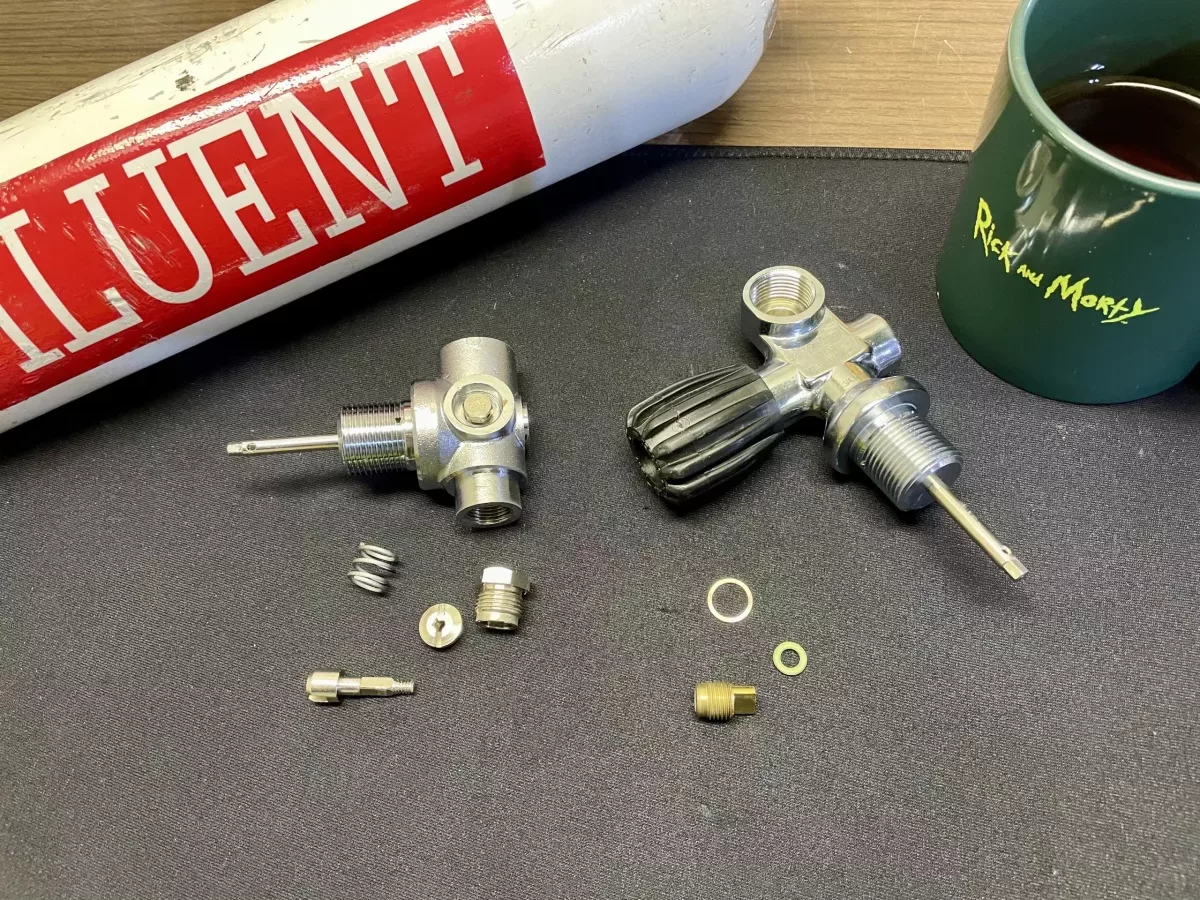
Tanks and Valves
Check for:
- Hydrostatic test date (required every 5 years in the U.S.)
- Visual inspection sticker (required annually)
- Smooth valve operation
- O-ring in good condition
Rust or moisture inside a tank can cause serious issues, so never skip inspections.
Rebreather
If you are diving a rebreather, you have special considerations. You should follow the manufacturers recommendations, but at a minimum you should:
- Change oxygen sensors
- Change all batteries
- Check all o-rings, replace as necessary
- Assemble unit and check for leaks
- Do a thorough pre-dive check and address any issues
Exposure Protection
Thermal protection is arguably the most important equipment decision for Great Lakes divers.
Many divers in the Great Lakes dive in a drysuit:
Drysuits
- Best for extended dives and colder depths
- Allow layering for insulation
- Require training and practice
If you dive dry, check:
- Neck and wrist seals
- Zippers and lubrication
- Inflator and exhaust valves
- Leak test the suit itself
A small seal tear can end a dive day quickly.
Refresh Your Dive Skills
Even experienced divers can get rusty over the winter.
Consider scheduling a pool session or refresher dive before the season starts.
Skills worth practicing include:
- Buoyancy control
- Drysuit operation
- SMB (surface marker buoy) deployment
- Air-sharing procedures
- Emergency procedures like manifold drills (if diving doubles), and bailout procedures (if diving a rebreather)
Great Lakes diving often involves deeper wreck dives and overhead environments around structures, so confidence in your skills matters.
Maintain Physical Readiness
Diving with thick exposure suits, heavy equipment, and climbing boat ladders can be physically demanding.
Before the season begins:
- Improve cardiovascular fitness
- Work on core and leg strength
- Stretch to improve flexibility for gear handling
Even modest conditioning can make dives more comfortable and reduce fatigue.
Start the Season Prepared
A little preparation before the first dive of the season can make a huge difference in safety, comfort, and enjoyment. Servicing gear, refreshing skills, and planning dives early will set you up for